
 Posted by
Are you planning a trip over to Europe? I’ve put together some information on essential planning and useful information.
Having been touring quite a few times now both in the UK and in Europe, you certainly pick up useful hints and tips along the way and work out what works for you (and what doesn’t).
If you’re heading over to Europe, you will need paperwork to hand ready to board the ferry (or by whichever means you are travelling) and to hand when you get off the ferry at your destination port. I have a tank bag for ‘important documents’ which comes with me whenever I get off the bike.
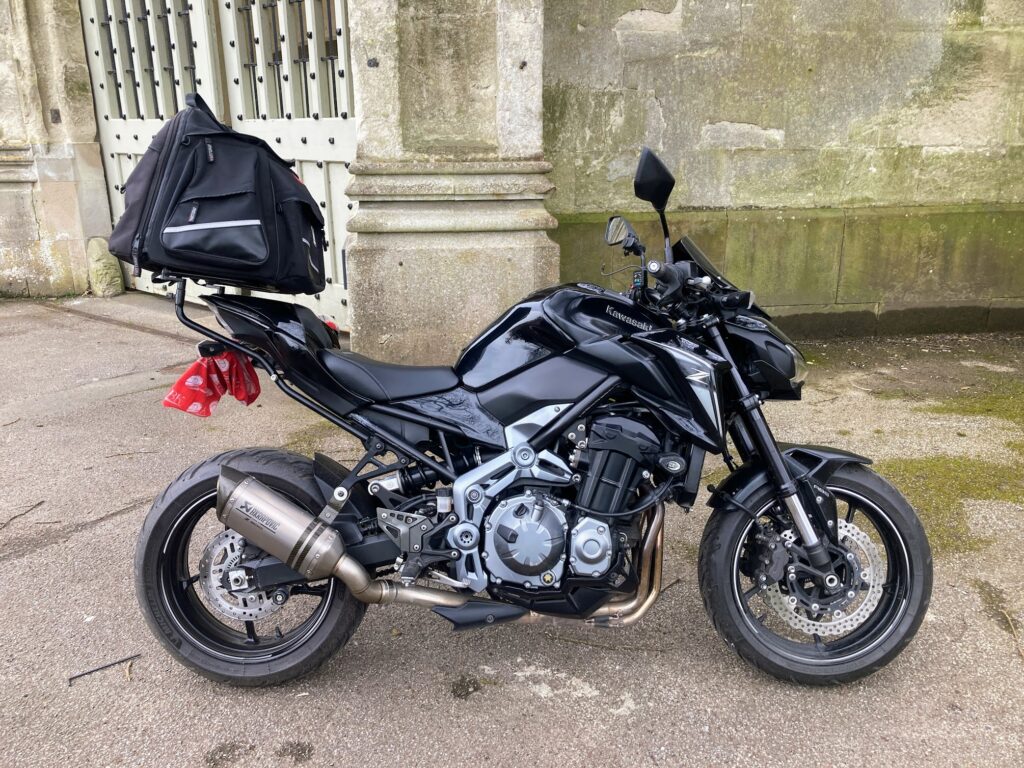
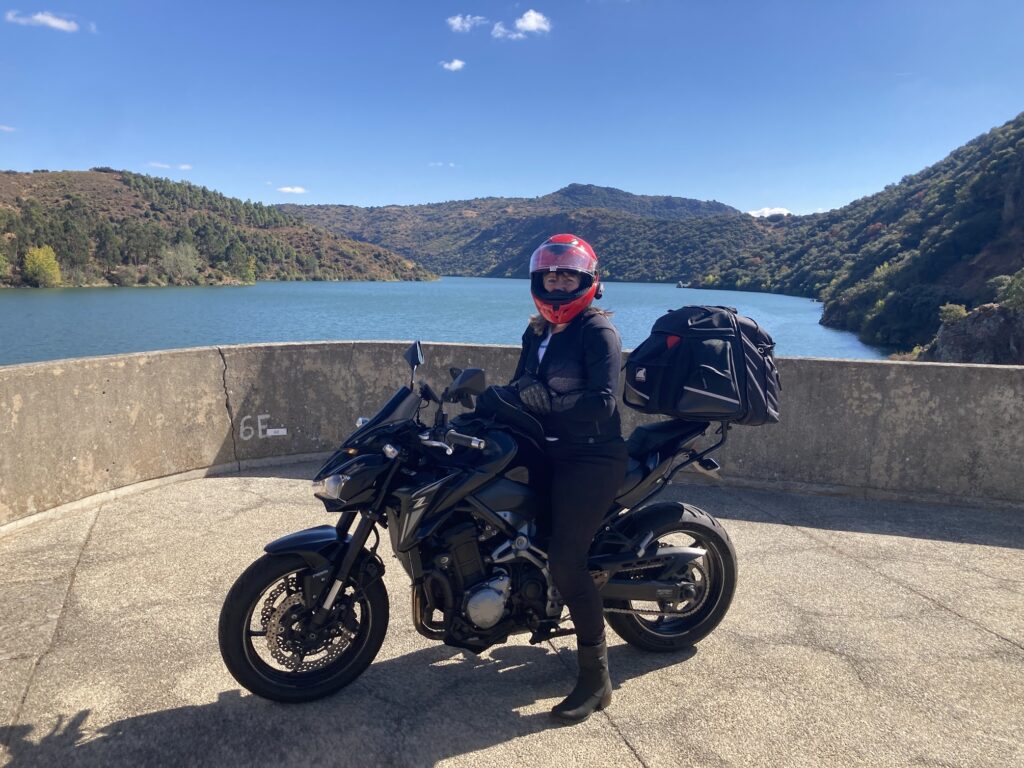
I use the Ventura Luggage system on my bike which is incredibly easy to use (the 50L Spada and 15L Delta which expands to 35L) which zip together, the bags can just be lifted on and off the bike. See the link to my YouTube video below ⬇️ to find out more about the Ventura kit.
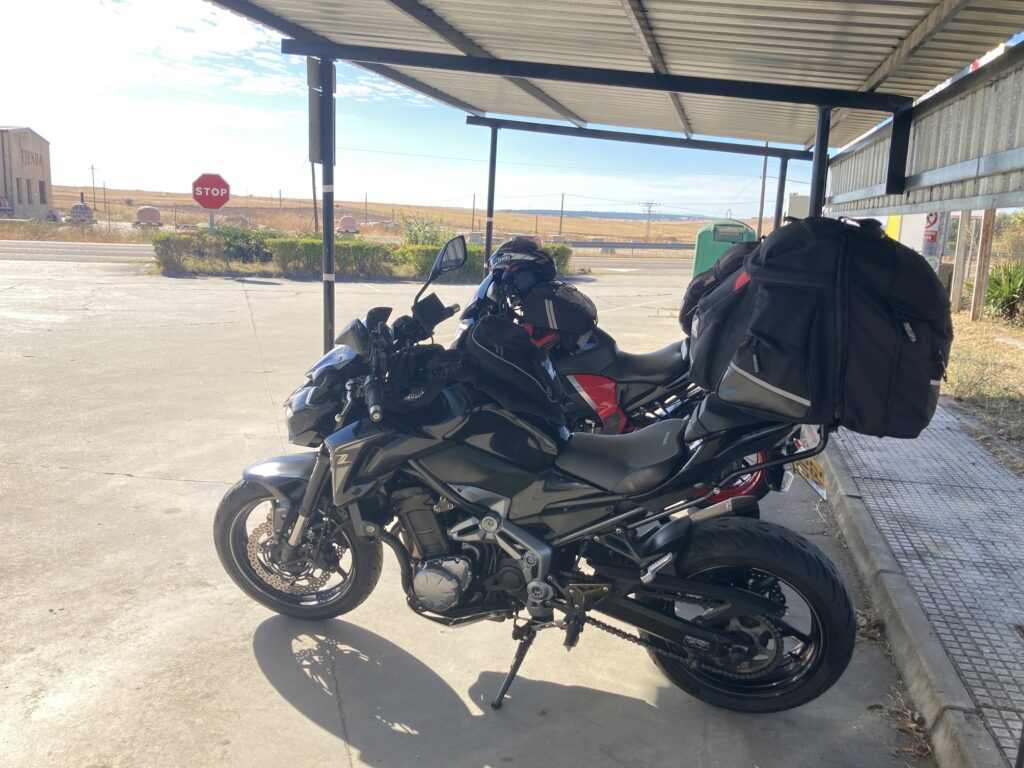
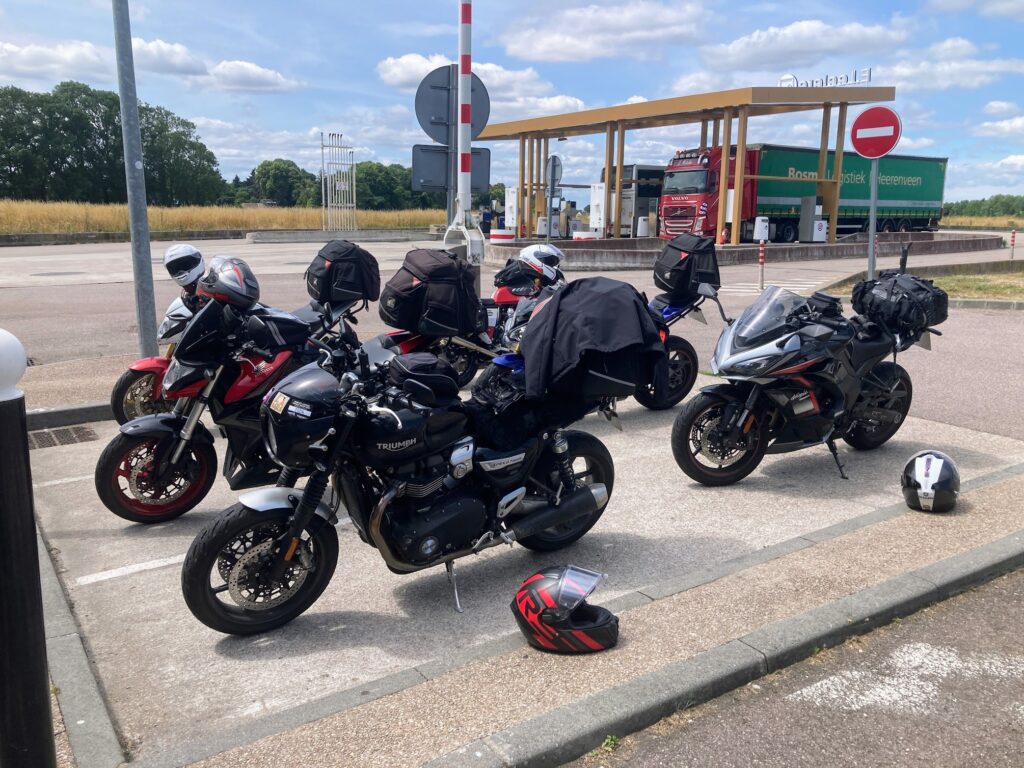
When leaving the luggage on the car deck of the ferry overnight, I have the larger bag facing the front and I cable tie this to the bike and cable tie the zippers on the bag together. I know this is not a guaranteed way of securing the bag, but it is a deterrent. I do not leave anything ‘valuable’ in this bag, just clothing.
The smaller bag zips to the rear of the 50L bag (I refer to this as my cabin bag) and I unzip just this bag and take it up to the cabin with me along with my helmet so I can charge my comms. This has everything I need for two nights on the ferry including a kettle, tea bags and mugs! I do get through a lot of tea 😂
Here is my list of essential items to pack (let me know in the comments if I’ve forgotten anything):
Tank bag:
In here I have two zip wallets, one containing information for the bike:
- V5c Log Book or V103B/letter if the bike is on finance
- MOT
- Insurance certificate
- European breakdown cover – this is not mandatory but I always have this but do check the small print. I make sure my cover includes repatriation for both me and my bike.
- Spare key (in case I lose my main key!)
Original documents, not photocopies, are required by most countries but I just keep copies in my tank bag in case I lose this. Incidentally, the log book, mot and insurance certificate should be carried with you at all times when on the bike.
The other zip wallet contains:
- Passport – have you checked the expiry date? It can get confusing here – the requirement is that your passport must have been issued less than ten years before your outward travel date, and have three months’ validity after your planned return date. This should be carried with you at all times. I take a photo of this on my phone in case I lose it.
- Driving Licence – UK licence holders used to have to have an International Driving Permit (IDP) but you do not need this anymore unless you are still using an old style paper licence, your licence was issued in Gibraltar, the Channel Islands or the Isle of Man in which case you will need an IDP for riding in most EU/EEA countries, for example, France and Germany but not Spain. I carry this with me all the time. I also take a photo of this on my phone in case I lose it.
- Printed tickets for Eurotunnel/ferry (in case phone dies)
- Printed list of accommodation booked (in case phone dies)
- Euros/Credit/Debit card
- European health card – formerly known as European Health Card (E111), it is now called the Global Health Insurance Card (GHIC). It is not mandatory to have this but it is free to obtain and valid for 5 years so do check the expiry on this before you go. It works in Europe as well as a few other countries including Australia. Please note that this should not be in place of separate travel insurance, it doesn’t cover private consultations or repatriation to the UK, it is strictly for emergency and essential care.
- Travel insurance – again this is not mandatory but I never travel without this. Make sure you read the small print here too so that it does cover you for riding motorbikes and the size of motorbike you are riding (some just cover up to 125cc). If you are off-roading or doing a track day, do make sure you are covered for the type of riding you will be doing. Remember to disclose pre-existing medical conditions and that these are covered.
Also in my tank bag I carry:
- Energy bars and bottle of water
- Hi-vis – it is mandatory to carry this in case of an emergency in many EU countries
- Spare bulbs and breathalyser kit (if required, different countries have different requirements)
- Zip-lock bag for my phone in case it starts raining
- Peg/bulldog clip for attaching boarding pass to the bike’s screen
- Tissues
- Hand sanitiser
- Glasses (if applicable)
Cabin bag:
- Medication (if applicable) – make sure you take this with you when you leave the car deck as entry to the car deck is not allowed once boarding has finished
- European plug adaptor/Mobile phone/sat nav chargers
- Spare glasses (if applicable)
- Kettle; tea bags; mugs (this could just be applicable to me 😂 )
- Hairdryer (again, this just could be applicable to me)
- Clothes (enough for the time on the ferry)
- Shoes (you’ll be surprised how easy it is to forget these)
- Toiletries
- Kindle/books/magazines
In the 50L bag:
- Waterproofs
- First aid kit including mosquito/insect repellant, antihistamine cream/tablets
- Spare gloves
- Torch
- Zip lock bags
- Carrier bags – useful if you have wet gear that is not dry before setting off for the next leg of your trip
- Gaffer tape – useful for fixing a broken fairing or indicator etc.
- Bungee straps – useful for strapping down luggage or a water bottle
- Zip ties – For fixing stuff, like a broken luggage lock, or keeping your bike together if it goes really bad!
- Tyre repair kit and small rechargeable compressor – these have come in handy on more than one occasion!
- Chain cleaner/lube, visor cleaner/cloth
- Clothes
- Shoes for when not on the bike (again, you’ll be surprised how easy it is to forget these and end up walking around in your bike boots in the evening 😂)
And don’t forget:
- Sat nav/maps pre-programmed with postcodes, accommodation, stop points etc.
- UK sticker for the number plate – it used to be a GB sticker but you now need to replace this with UK for riding outside of the UK, except Ireland
- Tool kit/spares/spare bulbs – now here you have to be very choosy in what you decide to take as you need to remember that a) you are on a bike and space is limited and b) bulking up with spares will add weight to your bike
- Emergency contact information for the people going with you on your trip
So, that’s the luggage covered but what about general things that you didn’t know you needed to know!
It is always a good idea to check out the up-to-date traffic laws of where you are heading to, remember different countries have different requirements. For example, environment zones such as Paris require you to have a Crit’Air sticker to enter; Switzerland and Austria require a vignette or toll sticker to use motorways which can be purchased at petrol stations near the border.
Remember to ride on the right (where applicable)
I know it’s an obvious thing to say but you will be surprised by how many riders (and drivers) forget this.
When you get off the ferry or tunnel and are following other vehicles, it is easy to remember because this is what the flow of the traffic is doing and it is at the forefront of your mind to ride on the right.
I find that it is when I set off the following morning or after a day or two when I have relaxed a little that I have that ‘Oh crap’ moment when I see a car on ‘my side of the road’ and remember that it is me who is on the ‘wrong side of the road’. It certainly wakes you up! After a day or so, it really does become ‘normal’ with just the odd ‘uh oh’!
Priorité à Droite
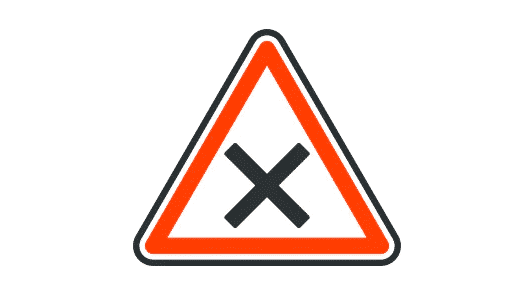
Have you heard of Priorité à Droite or Priority to the Right? No, I hadn’t either the first time I came across it as I hadn’t done my homework properly and I nearly came a cropper!
In some European countries there is a rule requiring drivers to yield to traffic approaching from the right at intersections, even from small roads. It applies at uncontrolled junctions often in rural areas or small towns where no road markings, signs, or traffic lights dictate priority.
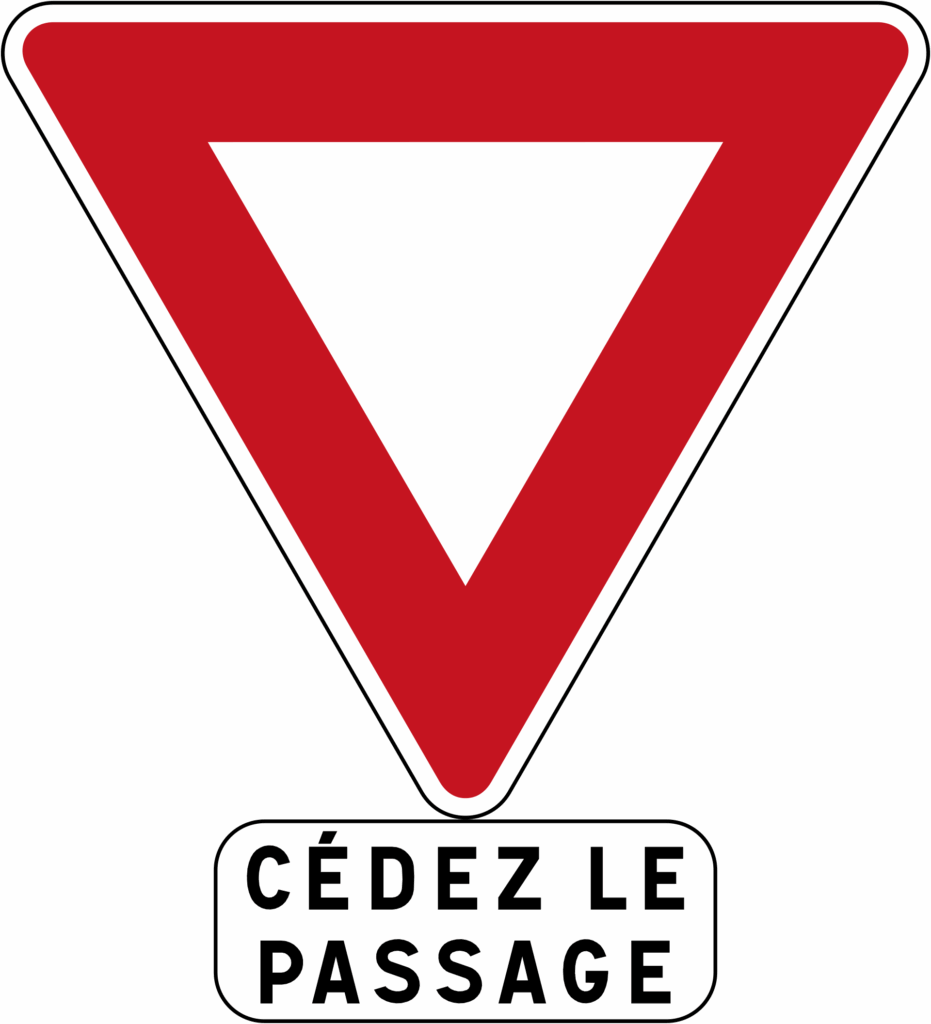
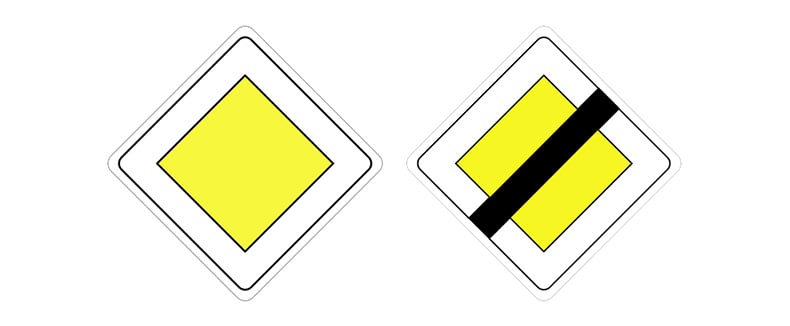
If there are no stop signs, cédez le passage (yield) lines, or yellow diamond signs (which signify you have priority), you must give way to the right and a red-outlined triangle with a black cross warns of a junction where this rule applies. Failing to yield can result in a €135 fine and four points off a French licence.
However, there are exceptions. A yellow diamond sign indicates you have priority on your road.
Where roundabouts are concerned, generally traffic already on the roundabout has priority, but on older, un-signed ones, priorité à droite applies. Solid or dashed white lines across your road mean you must yield to others.
It is good practice to get in the habit of slowing down when approaching junctions in residential or rural areas of Europe if you cannot see that you have a cédez le passage. Believe me, most drivers will not slow down or even look when you come across this junction when they have priority and you may be checking out just how good your ABS is.
Planning Your Trip
You will very quickly work out what kind of touring you like to do. I have done the one night here, two nights there with lots of mileage in between and then when I got home I realised that although I had done lots of riding and been to many places, I hadn’t actually seen anything of the actual places we went to.
My preference now is to limit my daily mileage to 200 miles per day with a max of 250 miles if necessary between legs to reach accommodation. I prefer to have maybe one or two overnights to reach the accommodation where I will stay for 5/6 nights and use this as a base from which I plan daily ride outs.
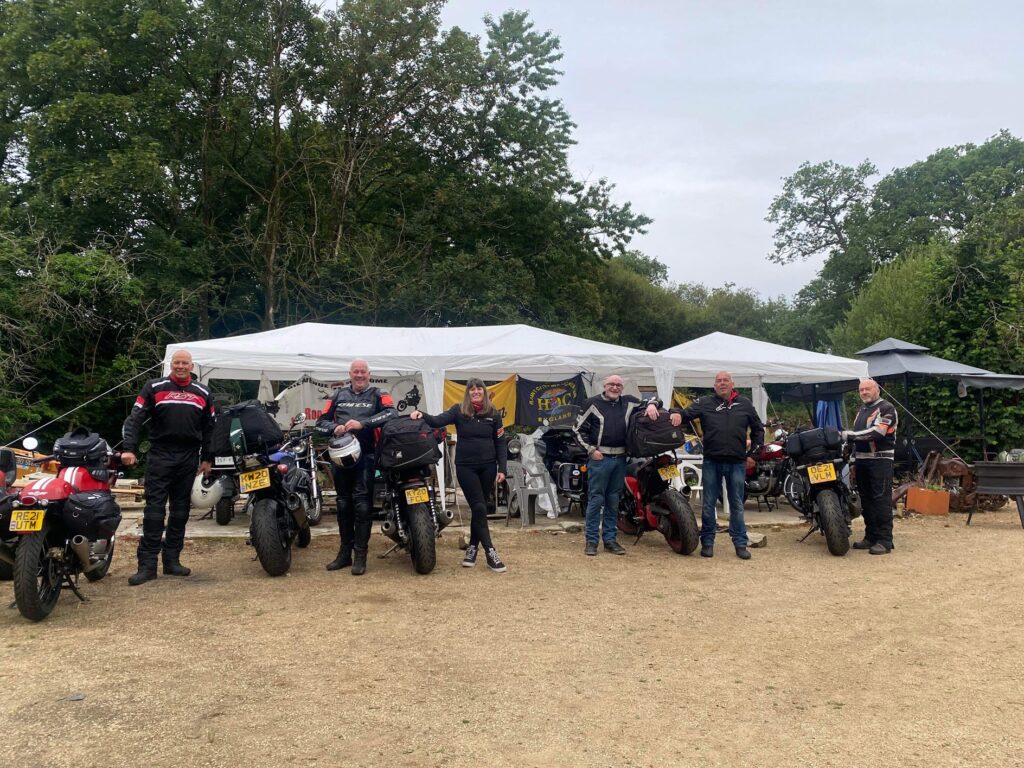
I prefer this as I can leave my luggage here and not have to cart this about on the bike every day. If the weather is shockingly bad I can just stay at the accommodation or stay local, I don’t have to venture out on the bike if I don’t want to, I haven’t got X amount of miles to cover to reach my next stop, I find this much more relaxing and it means I get to check out where I am staying and the surrounding areas properly.
I remember on a trip to Italy, there were six of us. On one leg we did between Milan and Venice, the mileage, according to the sat nav, was 145 kms which should have been an ‘easy’ ride. This was the shortest leg of the trip but ended up being the longest, about 8 hours in the end. We encountered a road closure and had to divert, there was a short stint on a motorway and we came across an accident and we were at a standstill for a couple of hours, standing in nearly 40 degree heat with our bike gear on, thankful for that bottle of water that was in my tank bag!
You have to be mindful when planning your trip of the type of road you are going on, the terrain and the weather. You need to have a degree of flexibility in your plans to allow for diversions, inclement weather and illness.
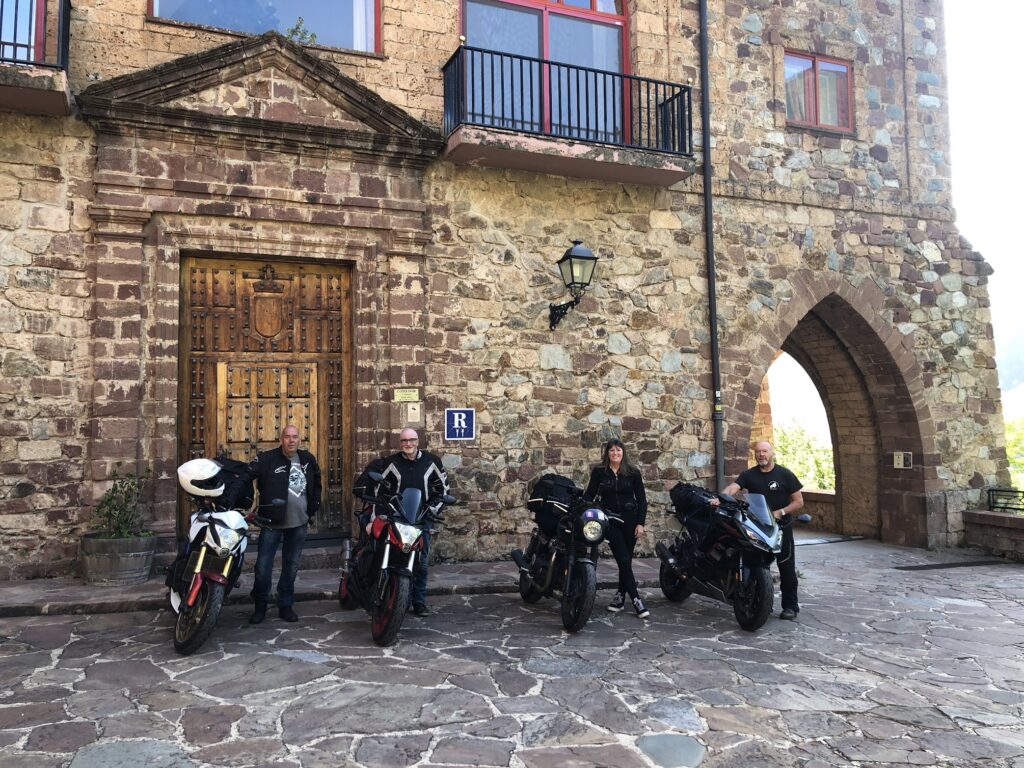
One trip, one of the guys got bitten by something on his leg, he didn’t think much about it and didn’t put any insect bite cream on. The next day the bite area was red and sore, we had to travel to our next accommodation and by the time we reached it, his leg was extremely red and swollen. A trip to A&E ended up in a five night stay in hospital on a drip as whatever had bitten him had had a nasty effect! Obviously we hadn’t incorporated a stay in hospital in our plans and had to adjust arrangements.
We were incredibly lucky that the guy was conscious and able to tell us where to locate things he needed such as travel insurance paperwork, passport etc. but it made me think it would be useful to have an idea of where this information is should he have been unconscious otherwise it would be a case of rifling through his belongings which is not something I would be at ease doing. Make sure the people you are going away with know where your important documentation is and who your emergency contacts are. Also it would be good practice to make a note of any medication you are on so this can be relayed should it be needed.
What is EES Monitoring
The EU’s Entry/Exit System (EES) is a new digital border system, which was launched in October 2025 and is expected to be fully operational by April 2026. This replaces manual passport stamping with electronic recording of entries/exits for non-EU visitors. Travellers must provide fingerprints and a photo on their first entry with the idea that this speeds up future travel.
The EES applies to non-EU/EEA/Swiss citizens (including UK citizens) taking short stays of up to 90 days in every 180 days in the Schengen Area. Twenty nine countries are covered here including France, Germany, Spain, Italy, Greece, Switzerland, Norway, and Iceland. Ireland and Cyprus are not part of the Schengen area and are excluded
Upon arrival at the border, a digital record is created, capturing a facial image and fingerprints. This process is mandatory and replaces stamping. Once registered, the record is valid for three years, requiring only fingerprint or facial verification for future visits.
The aim of the EES is to shorten border queues, enhance security, and automatically track overstays. You do not need to register prior to your first trip using the EES, checks are done at the border via self-service kiosks or with officials.
Children under 12 are generally exempt from fingerprinting but must have a photo taken. Refusal to provide biometric data will result in your entry being denied.
European Travel Information and Authorisation System (ETIAS)
Another system being introduced in October 2026 is the ETIAS travel authorisation (European Travel Information and Authorisation System).
This is a new, mandatory pre-travel screening for visa-exempt non-EU citizens (including UK/US citizens) visiting 30 European countries. It is digital, costs €20 and authorization is valid for three years (or until your passport expires) that allows multiple entries for short stays of up to 90 days within a 180-day period.
You must fill out an online form, providing personal data, passport details, and travel history. Be mindful that although most applications are approved within minutes, some may take up to 4 days, so don’t leave this to the last minute. You must have an approved ETIAS authorized before boarding a plane, ship, or coach to the Schengen area including France, Germany, Italy and Spain, plus countries that require it like Cyprus.
The ETIAS will work alongside EES which will replace physical passport stamps with a digital record of entries and exits.
Don’t forget…..
General things to consider before you set off:
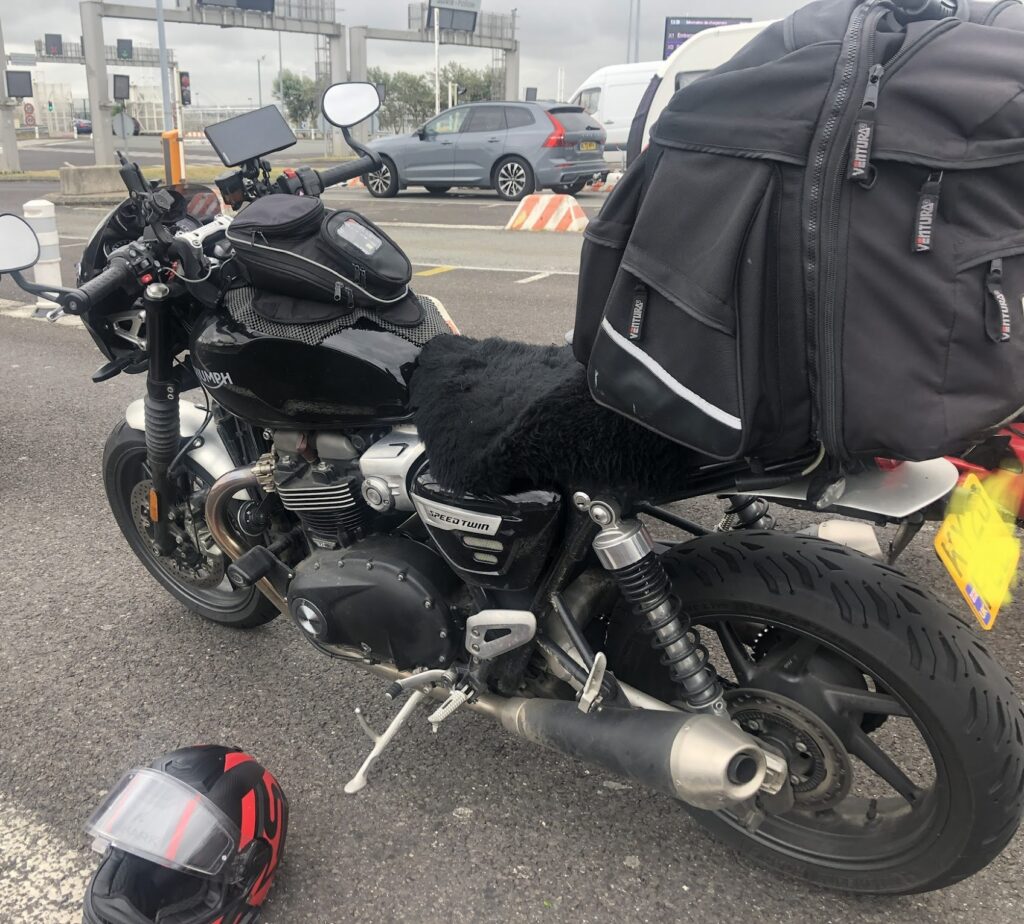
- Give your bike a once over (or ask your mechanic) – make sure the fluids are topped up, check the tyres are okay – do they have enough tread on them for the amount of mileage you have planned; lube the chain and check adjustment
- If you are using a sat nav, set this up on your bike at least a week or two beforehand and go for a ride using the sat nav to a) check that the sat nav does actually work and b) so that you can familiarise yourself with the settings and know how to use this whilst riding along
- Check your bike gear before you leave – is it suitable for the riding conditions/weather, for example, I have vented gear for when travelling to hot places as riding around in leathers in 30 plus degrees is really not pleasant, you will be hot and sweaty and it is surprisingly tiring
- Check, check again and then triple check that you have all the necessary documents and paperwork you will need for your entire trip including your passport and driving licence
Most important of all ….
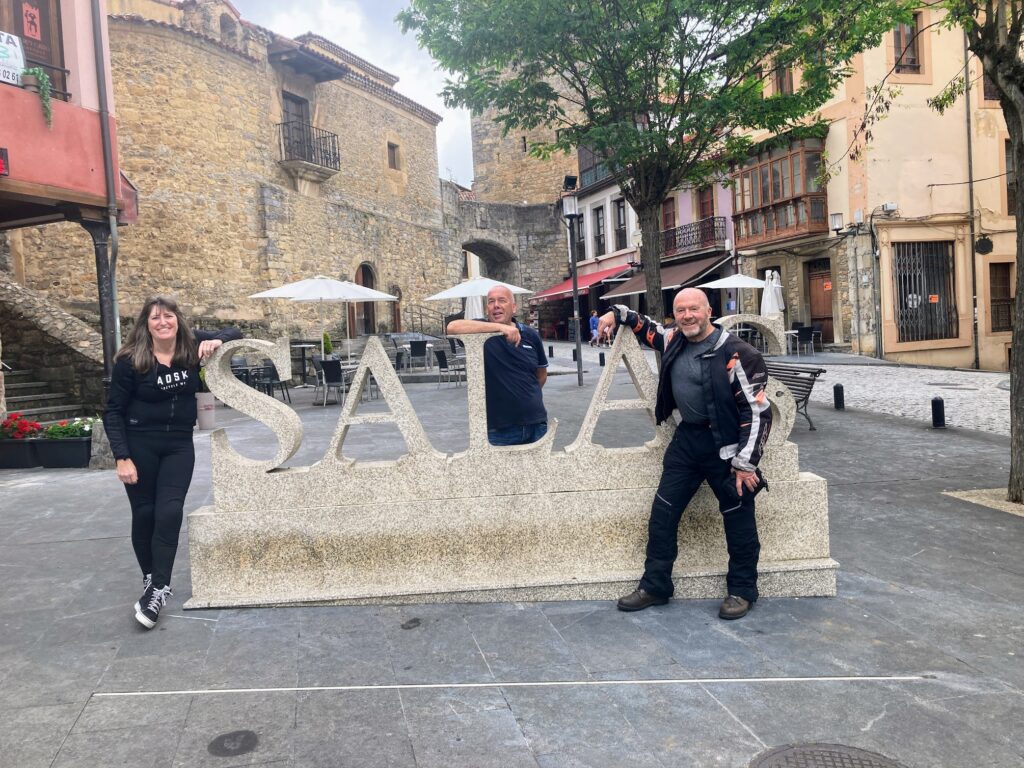
Have a fantastic trip. Remember you are going on your holibobs, it is supposed to be an enjoyable experience.
If you come back and it is not quite as you thought it would be, look at what didn’t work and do things differently for your next trip because there will be a next trip. Once you start touring, you will realise what a fantastic experience it is on the bike and will want to start planning your next trip as soon as you get back, I know I do!
BK
Here’s a link to my YouTube video on the Ventura luggage system:
https://youtu.be/io5FcyqdGLk?si=p3BRLY5h2rKc_-XJ
Here’s a link to my trip to Spain/Portugal last year:
https://bikerkaz.com/my-spain-portugal-2025-adventure-motorbike-touring/
#realbikersreallawyersrealanswers
#callusbeforewecallyourinsurer
some really useful info there
Thanks Giles, let me know if I’ve forgotten anything 🙂
Very comprehensive list. Essential.
One element to add:
Check that your travel insurance is valid for the entire journey. To explain, I have an annual travel insurance policy until 2027 but it has a 30 night trip limit. I did not realise that on my current trip this would affect me as my plan was to go for about 3 weeks. The result was that I ended up having a motorway accident, about 1.5 hrs from Calais, exactly 1 month after I left and subsequently the insurance company refused to assist me (Carole Nash/AXA). No budging. As I’m lucky to be alive after the sterling efforts by the French rescue service and hospitals, I now had to arrange my own repatriation (£3.5k). Going to UK tomorrow!!!
So CHECK if this affects you !! It created a great deal of anxiety whilst I was fighting for my life in ICU. Don’t let it be you. Stay safe!
Crikey! Really hope you are recovering well and get home safely!! Thank you so much for the information on travel insurance, that is really interesting and useful to know.
Your Ventura luggage strategy for the ferry zipping a smaller ‘cabin bag’ to the main 50L unit so you can easily take your comms, helmet, and tea essentials upstairs—is an absolute genius hack. Also, thank you for highlighting Priorité à Droite and the yellow diamond signs; that rule catches so many UK riders off guard in rural Europe and can be genuinely dangerous if you don’t do your homework. Brilliant resource
Thank you Saleh, I really appreciate your kind comments. Yes, it is always interesting to read about other people’s way of doing things as a new hack or idea usually comes about. I didn’t do my homework properly with the Priorite a Droite to start with so thought it was really useful to pass on!