
 Posted by

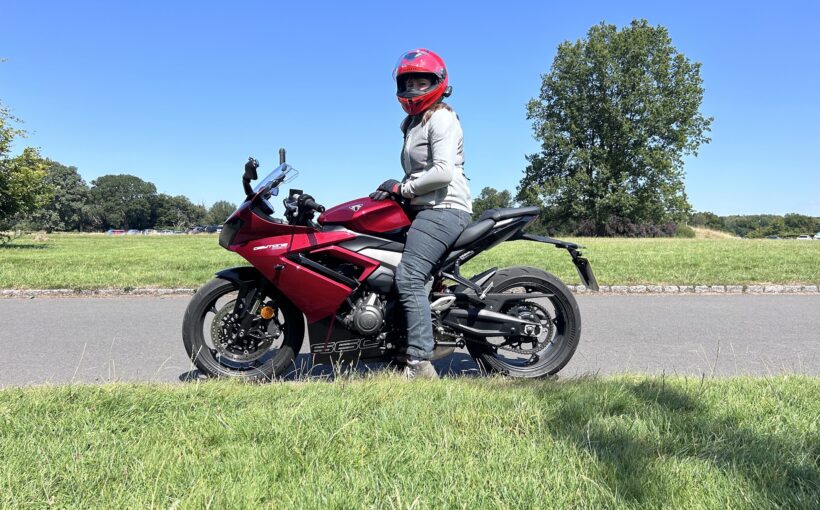
It was a lovely, warm sunny evening and I rode to the pub to meet up with some friends.
I passed a few bikers whilst on my ride, most of them in ‘proper’ gear, a few not. The few not, I am talking about were wearing shorts, t-shirt and trainers.
At the pub with my friends, we got chatting about suitable bike gear to wear on the bike when the weather is warm. Personally I always wear armoured gear when on the bike, even if it’s for a short ride.
I wear Knox vented gear which I like because I can layer this up or down, depending on the temperature. My boots have ankle and toe protection, I have ‘winter’ and ‘summer’ gloves and of course, my helmet.
We inevitably got onto the subject of those few riders lacking the ‘proper’ gear and someone asked ‘If you are involved in an accident and you suffer serious injuries because you were not wearing safety gear, does this affect the level of compensation you might receive in a successful claim against the other party?’
Well, as you can see, this got me thinking 🤔
So, what are the laws relating to motorcycle gear?

In the UK, the only legally required item of clothing whilst riding a motorcycle is a safety helmet that meets approved safety standards. Both riders and passengers must wear a helmet.
Whilst there is no legal requirement to wear protective gear like jackets, trousers or gloves, wearing CE-approved riding gear is highly recommended to protect against serious injuries in an accident.
Germany is the same as the UK, the only legally mandatory motorcycle clothing is an approved helmet.
In France, Switzerland, Italy and Portugal you must legally wear a CE-certified helmet and gloves at all times and a high-visibility vest is legally required to be worn if you break down or stop on the roadside, although you do not need to wear this unless you have broken down, just carry this with you.
Spain has gone that one step further by adding closed-toe shoes along with approved helmets and gloves and you must carry reflective gear for emergencies.
So, in answer to my friend’s question, is the level of compensation affected? As with many things in the law, it is far from clear cut. However, if for example, you suffered a head injury and you were not wearing a helmet (which is compulsory in the UK unless you are a Sikh and then you are allowed to wear a turban) and you suffered a head injury, you could expect your compensation to be reduced by approximately 10% to 25% by the court. The same may be true if you were wearing a “helmet” but it was not legal i.e. was a vintage military item to match your vintage military bike. There is various established case law on this point.
This is known as contributory negligence, meaning the court could find that you are partly responsible for making your own injuries worse, ie. because you weren’t wearing the ‘proper’ helmet, even if the accident was 100% caused by a third party.
However, there is no legal requirement to wear any other protective gear in the UK (jacket, trousers, boots etc.). Therefore if you are not wearing any of this gear and you suffer broken limbs or road rash, for example, then the defendant insurer cannot automatically try and reduce your compensation. Further there is no established case law on this point.
That said, you can certainly envisage a scenario where the defence may try and prove that wearing the ‘right’ gear would have prevented or reduced those specific injuries ie. if a person was wearing boots rather than trainers, then would their foot injury be as bad etc. As such, a number of factors may come into play:
- Whether the ‘proper’ gear would have realistically prevented or reduced the injuries;
- Medical expert evidence;
- The type of injuries suffered;
- Whether the lack of ‘proper’ gear had any effect on those injuries.

So, although not wearing the ‘proper’ gear doesn’t automatically mean a lower payout, it potentially could if there’s evidence that it contributed to the severity of your injuries.
Whilst it is our right to choose what we wear within the law, and that choice must be respected, we must also bear in mind that if we choose not to wear protective gear, it could have implications for the level of compensation paid in the event of an accident.
BK
#realbikersreallawyers
#callusbeforeyoucallyourinsurer